Purchase Facebook Event Not Tracking on WordPress: Causes and Fixes

The usual answer is simple: with purchase event not tracking on wordpress, causes and fixes usually start with a missing or late checkout event. Most cases come from the order confirmation page not loading the tracking code, or from a plugin sending the event before the order data is ready. Open one real test order, then check the browser’s network requests and your analytics debugger at the same time.
$ part ofMeta Pixel Not Working? How to Fix Tracking on Any PlatformThe complete guide this article belongs toOpen guide →If the event appears in the browser but not in reports, the problem is usually a wrong event name, missing purchase data, consent blocking, or delayed processing. Don’t place a live test order until you know whether the transaction could create a real charge; use your payment provider’s test mode when it’s available.
Why WordPress Purchase Events Don’t Track
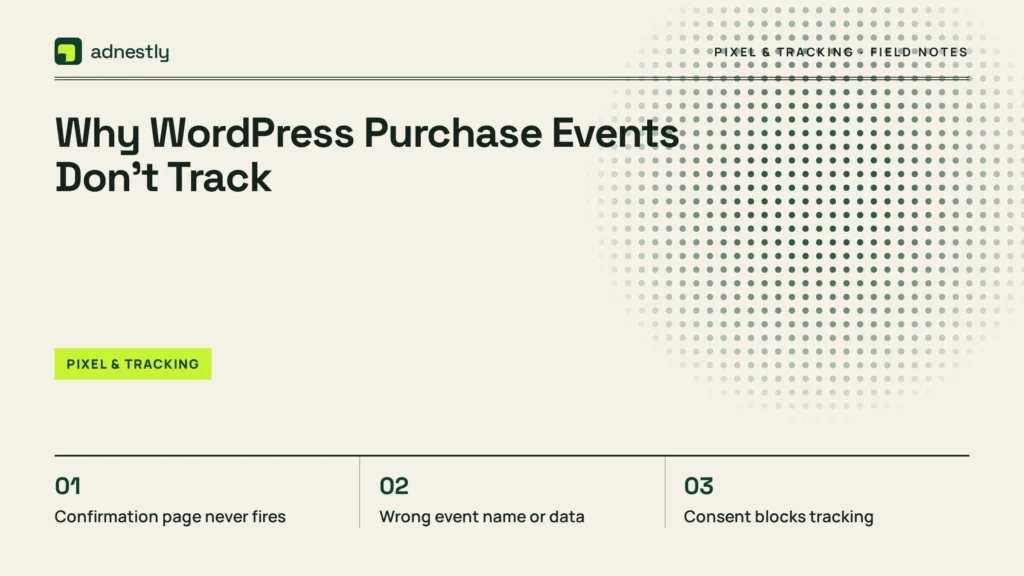
The table ranks the causes from the checks that usually find the problem fastest to the ones that need more care. Your exact fix depends on the tracking tool, checkout plugin, payment method, and whether the order finishes on your site or on a hosted payment page.
| Cause | How common | How to confirm it | Fix it yourself? |
|---|---|---|---|
| Confirmation page never fires | Most common | Check page source and debugger | yes |
| Wrong event name or data | Very common | Inspect request parameters | yes with care |
| Consent blocks tracking | Common | Test after consent choice | yes with care |
| Checkout redirects elsewhere | Common | Compare payment page domain | yes with care |
| Duplicate tracking setup | Less common | Count matching requests | yes with care |
| Cache serves old scripts | Less common | Test logged-out window | yes |
| Plugin or server failure | Rare | Review logs and support notes | no |
A purchase can be completed correctly while its measurement fails. That’s why the first check should compare the order record with the event request, not the sales report alone.
Place a test order and note its order ID, value, currency, and confirmation URL. In the browser’s network or tracking debugger, check whether one purchase request contains matching details.
If the order exists but no request appears, inspect the confirmation-page trigger, consent state, and redirect domain. If the request appears with the wrong value or event name, correct the checkout mapping before changing reports.
Reloading a confirmation page can create a second purchase unless the setup prevents duplicate events. Test once in a logged-out window, then verify that the order ID isn’t sent again.
When payment finishes on another domain, your site’s confirmation-page script may never run. Check the hosted checkout’s tracking options or the payment provider’s webhook and server-side integration instead.
The Confirmation Page Never Fires
A purchase event often depends on code running after the customer reaches an order confirmation page. If the payment succeeds but the customer is sent to a blank page, a different domain, or a page without the tag, the order can exist in WordPress while the event never leaves the browser.
The first check is whether the confirmation page loads at all. Place the site in a safe test mode, complete one test order, and record the final URL. A normal result usually includes an order-received, thank-you, or confirmation path, but the exact path depends on your checkout plugin.
Next, open the browser’s developer tools before placing the test order. Select the Network tab, search for requests containing collect, gtag, google-analytics, facebook, or the name of your tracking tool, and complete the order. Don’t treat the page view as proof; you need to see a request that represents the purchase.
Use a tag debugger or the analytics platform’s debug view to inspect the same order. Check whether the event name is purchase, whether the value is present, and whether an order or transaction ID appears. Google’s GA4 ecommerce purchase guidance lists the purchase event structure and the data used for ecommerce reporting.
If no request appears, inspect the confirmation template and the plugin’s integration settings. The tracking code must load on the final page, not only on the cart or checkout page. If the order is confirmed on a payment provider’s site, the return URL must bring the customer back to a page where your tracking code can run.
The fix may be as small as enabling the plugin’s purchase tracking option or adding the tag to the order-received hook. Don’t paste a second full tracking snippet into the page if the plugin already adds one. The common mistake is adding another tag quickly; it can create duplicate revenue, which is harder to clean than one missing event.
This check usually takes one test order and a browser inspection. If the confirmation template is custom, the work may take longer because the developer must connect the event to the order-complete action. The time depends on your checkout plugin and payment flow; read the plugin’s official documentation to identify the correct hook.
The Event Sends the Wrong Data
A request can reach Google Analytics or another platform and still fail to become a useful purchase. The usual cause is a wrong event name, a missing transaction ID, or purchase details placed in the wrong parameter fields. This cause looks different from a missing confirmation page because you can see the request, but its values are empty or rejected.
Open the event debugger and complete one test order. Find the purchase request, then read each field instead of stopping at the event name. Check the event name, transaction ID, currency, value, item list, and item price; the platform’s required or recommended fields can differ.
If the event is called completed_order, sale, or another custom name, your reporting setup must be built to recognize that name. For a GA4 ecommerce setup, the standard event name is purchase. A custom name can still be measured, but standard purchase reports won’t automatically treat it as the normal ecommerce event.
The transaction ID needs special attention. It should identify the order consistently, not change every time the page reloads. If it’s missing, two systems may not match the order; if it changes on refresh, one order can look like several purchases.
Check the value and currency against the test order, too. A value of zero, a text string with a currency symbol, or a mismatch between USD and another currency can distort revenue even when the event count looks correct. If X is wrong in the request, fix the data mapping; if the request is correct but the report is delayed, check the platform’s processing status instead.
The fix normally sits in the ecommerce plugin, tag manager variable, or custom code that builds the event. Change one source only, then run one test order and reload the confirmation page once. The trade-off is speed versus control: a plugin setting is quicker, while custom mapping handles unusual products but needs more maintenance.
Consent Stops the Tracking Request
Consent settings can prevent a purchase tag from running, even when the checkout and confirmation page work. This cause is different from a broken page because the request appears after the visitor allows analytics or marketing cookies, but not before that choice.
Test two separate paths in a private browser window. First, reject optional tracking and see whether the request is absent; then allow the category used by your analytics or advertising tag and repeat the test. Clear the site’s cookies between tests, or the first choice may still control the second result.
Also check whether your consent tool changes behavior on a payment redirect. A customer may give consent on your site, leave for a payment page, and return with a new session or a different consent state. The event can then be blocked on the return page even though the order is marked paid.
Look at the tag manager preview, consent panel, and browser requests together. If the tag says it was blocked, the issue is a consent rule. If the tag fires but no request leaves the browser, inspect the tag configuration or an ad blocker. Don’t disable the consent system just to make one test pass; that can create privacy and compliance problems for your region.
The safe fix is to connect the purchase tag to the correct consent category and test both allowed and denied paths. If your business operates across countries, the rule can vary by location and tool configuration. Read your consent platform’s documentation and ask a privacy professional when you’re unsure; this article isn’t a legal compliance decision.
Other WordPress Tracking Causes
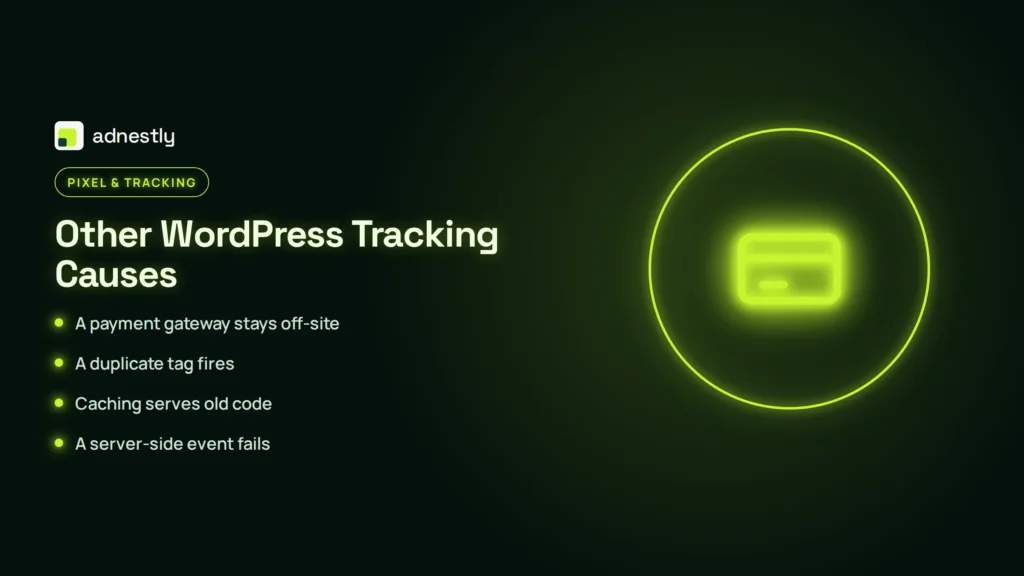
These causes appear less often, but their clues are clear:
-
A payment gateway stays off-site: The final confirmation happens on another domain, and your site never receives a reliable return event. Check whether the gateway sends a completed-payment webhook or returns customers to a tracked confirmation page. If neither happens, the browser can’t reliably report the purchase.
-
A duplicate tag fires: Two plugins, or a plugin and Tag Manager, send matching purchase requests for one order. Compare the order or transaction ID in each request. Keep one purchase tag, not several tags that happen to use the same event name.
-
Caching serves old code: The logged-out test shows an older script, while an administrator sees the new tracking setup. Purge the WordPress, server, and CDN caches, then retest in a private window. Administrator sessions can bypass the cache and give a false sense that the fix worked.
-
A server-side event fails: Browser tracking works, but the server request has an authentication, endpoint, or payload error. Check the request status and server logs without exposing API keys. A failed server request needs its integration settings corrected, not another browser tag.
-
A refunded or pending order is counted: The event fires before the payment status is final, so the platform records a sale that later changes. Configure purchase reporting around the status your payment system treats as completed. If pending orders must be tracked, use a separate event rather than labeling them completed purchases.
If the clue points to server logs, payment webhooks, custom PHP, or API authentication, stop before editing production code. A WordPress developer or the payment and analytics plugin support team should handle that part.
What WordPress Tracking Fixes Require
A simple confirmation-page fix needs a test order, browser developer tools, and access to the checkout or tracking plugin. It’s usually smaller than rebuilding the checkout, but you’ll still need to clear cache and test as a logged-out visitor.
Wrong data mapping needs access to the event settings or tag manager variables. The work is more involved than switching on a plugin option because you must compare the order total, currency, products, and transaction ID one by one. Keep one test order ID so you can match every system without guessing.
Consent problems require access to the consent platform and its category rules. The trade-off is clear: stricter blocking protects the visitor’s choice but reduces measurable events, while looser settings may create privacy risk. Don’t choose the setting by revenue alone.
Off-site payment, webhook, and server-side fixes may need a developer. They can involve payment credentials, logs, return URLs, and custom code, so they cost more time than changing a dashboard checkbox. You’re not the right person for this fix if you can’t safely identify test mode or restore a backup.
For a real quote, give the developer the checkout plugin name, payment gateway, final confirmation URL, tracking platform, and one timestamped test order. The exact effort varies most with the checkout flow; you can read your own case off whether the order ends on your WordPress site or elsewhere.
Related guides
- Purchase Event Not Tracking on Wix: Causes and Fixes
- Purchase Event Not Tracking on Shopify: Causes and Fixes
- Purchase Event Not Tracking on Squarespace: Causes and Fixes
Frequently asked questions
Can a purchase happen without the event tracking?
Yes, a purchase can complete while the event fails. The payment gateway and WordPress order system can record the transaction separately from Google Analytics, Meta, or another tracking tool. Check the order record first, then inspect the confirmation-page request. If the order exists but no purchase request appears, focus on the page, tag trigger, consent state, or payment return path.
Why is my WordPress purchase event showing zero value?
A zero value usually means the event sent no usable total, or the tag read the wrong variable. Open one test request and check the value, currency, and transaction ID together. If the checkout uses a different currency or tax display than the tag expects, fix the mapping in the ecommerce plugin or tag manager. Don’t change report settings before checking the raw request.
How long does it take for a purchase event to appear?
A real-time or debug view should usually show a valid browser event within minutes, but standard reports can process later. The exact delay depends on the analytics platform, reporting view, filters, and whether the event was received correctly. If it’s missing from both the live debugger and later reports, waiting won’t repair it; inspect the request and event parameters.
Is it safe to test a purchase event on a live store?
It’s safe only when the checkout is in the payment provider’s test mode or the order process clearly prevents a real charge. A live card test can create a genuine payment, refund work, and customer records. Use a test account, a documented test payment method, and a clear order ID. If the gateway offers no safe test path, ask its support team before proceeding.
What happens if the purchase event fires twice?
The platform may count two purchases for one order, which can inflate revenue and conversion reports. Reloading the confirmation page is a common trigger when the event has no stable transaction ID or no duplicate protection. Check whether two requests share the same order ID. If they do, remove the extra tag or add the platform-supported deduplication method rather than deleting reports by hand.
Does it matter if the thank-you page is cached?
Yes, a cached confirmation page can show old tracking code or reuse the wrong order data. Test in a private window after clearing the site and CDN cache, then compare the script version and purchase request with an administrator session. If the two sessions differ, exclude the confirmation page from caching through your host, cache plugin, or CDN settings.
Conclusion
Once tracking works, keep it healthy by adding a small test purchase to your regular site checks. Review it after WordPress, checkout, or analytics updates, and watch for sudden changes in reported revenue. If the event still behaves oddly, ask your developer or plugin provider to inspect the order flow with you.

Aaron Kelly writes about Facebook tools, account management, and business advertising. His content covers account security, Facebook Ad Accounts, Business Manager setup, Pixel and conversion tracking, Business Manager verification, and admin profile verification. He focuses on explaining technical processes and common account issues in practical terms, helping businesses and advertisers manage their Facebook assets more effectively and build a more secure, reliable advertising setup.
Checked against Meta’s own documentation. How we write and update guides